

Commonhold – A Better Alternative to Leasehold, or Simply a Different Set of Problems?
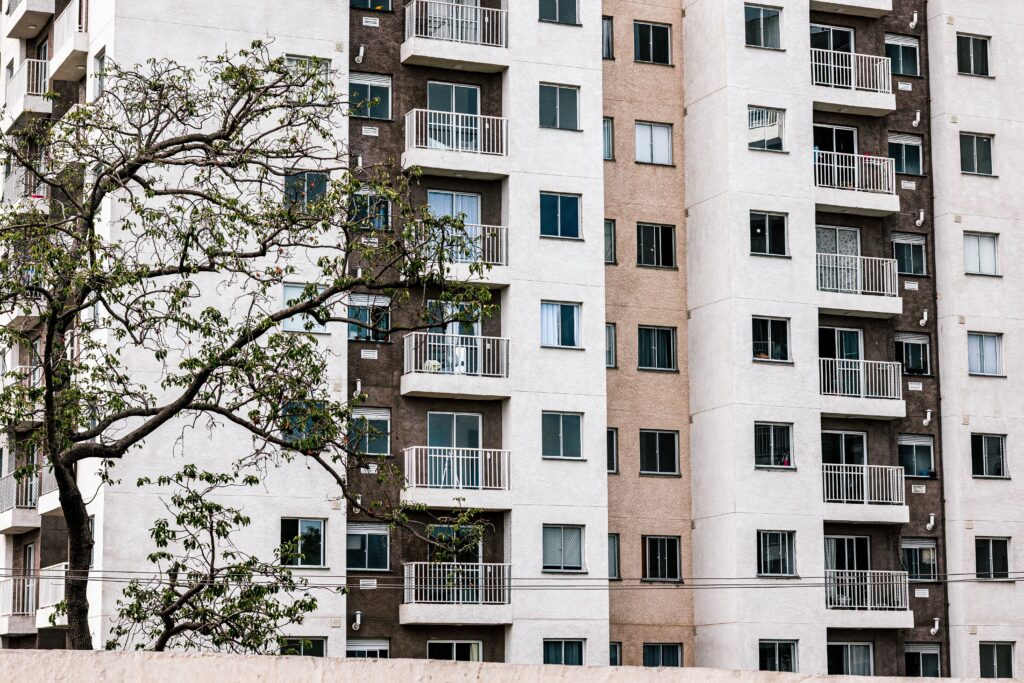
The Government’s plans to phase out leasehold flats in favour of commonhold have been widely welcomed by campaigners. For many leaseholders frustrated by rising service charges, escalating ground rents and a perceived lack of control over their homes, the prospect of collectively owning and managing their building appears an obvious improvement.
However, as with most property reforms, the reality may prove rather more complicated, write Clive Scrivener MRICS and Zah Azeem MRICS, Partners at Wimbledon based Chartered Surveyors Scrivener Tibbatts.
Commonhold is not a new idea. It was introduced in England and Wales in 2004, yet fewer than twenty commonhold developments exist today. That fact alone should give policymakers pause for thought. If commonhold were an unambiguously superior model, one might reasonably ask why it has failed to gain traction over the past two decades.
Under commonhold, residents collectively own and manage their building. There is no external freeholder and no diminishing lease term. On paper, this gives homeowners greater control. In practice, however, collective ownership brings collective responsibility.
One of the most significant risks is decision-making deadlock. Major repairs, maintenance programmes and reserve fund contributions all require residents to work together. Anyone who has served on the committee of a residents’ association or management company will appreciate that obtaining unanimous agreement on even relatively modest expenditure can be challenging.
Evidence given to Parliament has highlighted the risk of buildings falling into disrepair where owners are unwilling or unable to contribute adequately to reserve funds. Deferred maintenance can ultimately lead to substantial one-off bills running into tens of thousands of pounds per flat. The fact that residents own the building collectively does not remove the need to pay for its upkeep.
Nor does commonhold eliminate disputes over service charges. Rather, it changes who is having the argument. Under leasehold, disagreements are often between leaseholders and a freeholder or managing agent. Under commonhold, disputes can become neighbour-versus-neighbour disagreements, which may prove even more difficult to resolve.
The BBC wrote to all of the groups that run commonhold developments in England and Wales, and not all described a harmonious way of living.
One resident described commonhold as a “nightmare”. He said one flat owner has refused to pay towards maintenance and other residents now have to pay more to cover that share. The collective is now £10,000 in debt. Due to the ongoing dispute, the man did not want to be named, but said the leasehold system would have offered more protection in his case because, “if a leaseholder doesn’t pay there is something in the contract that will say ‘you forfeit the lease’. With commonhold, that doesn’t happen, so the payments fall on everyone else.”
“The government is pushing commonhold forward, but it’s not the way to go. It’s terrible – a disaster.”
Another issue that has perhaps not received sufficient public attention is enforcement. Under the current leasehold system, there are established legal mechanisms for pursuing non-payment of service charges. Under commonhold, the position may be considerably more complex. If one owner refuses to contribute, the remaining residents may initially have little choice but to cover the shortfall themselves while legal proceedings are pursued. That can place significant financial strain on responsible owners.
There are also practical concerns regarding finance and lending. Although the mortgage industry is increasingly preparing for commonhold, lenders, surveyors, conveyancers and estate agents will need to adapt to an entirely different ownership structure. Any period of uncertainty in the lending market has the potential to affect valuations and marketability.
International comparisons should also be approached with caution. Countries such as Australia and the United States operate systems broadly similar to commonhold, but they also have long-established legislative frameworks and cultural expectations surrounding collective building management. Simply importing the legal structure does not automatically import the expertise, governance arrangements or willingness of residents to become active custodians of their buildings.
None of this is to suggest that leasehold does not require reform. There are undoubtedly leaseholders who have experienced genuine hardship through excessive charges and poor management. Equally, there are professionally managed buildings that function effectively and provide independent oversight that residents themselves may neither want nor have the time to undertake.
The danger lies in presenting commonhold as a simple cure for all the perceived failings of leasehold. Property ownership, particularly in multi-occupancy buildings, is inherently complex. Costs do not disappear merely because ownership structures change, and human nature does not become more cooperative because legislation requires it.
As politicians press ahead with reform, it is important that public expectations remain realistic. Commonhold may ultimately prove to be a better system for many homeowners, but it is unlikely to be a panacea. More accurately, it represents a different way of managing the same underlying challenges of maintaining buildings, collecting contributions and persuading neighbours to work together in the long-term interests of their shared asset.
If you would like to discuss something related to a property valuation specifically a Lease Extension, Freehold Valuations and Market Valuations for disputes, please contact Clive or Zah direct via email at clive@scrivenertibbatts.co.uk and zah@scrivenertibbatts.co.uk or call 020 8947 7040.